
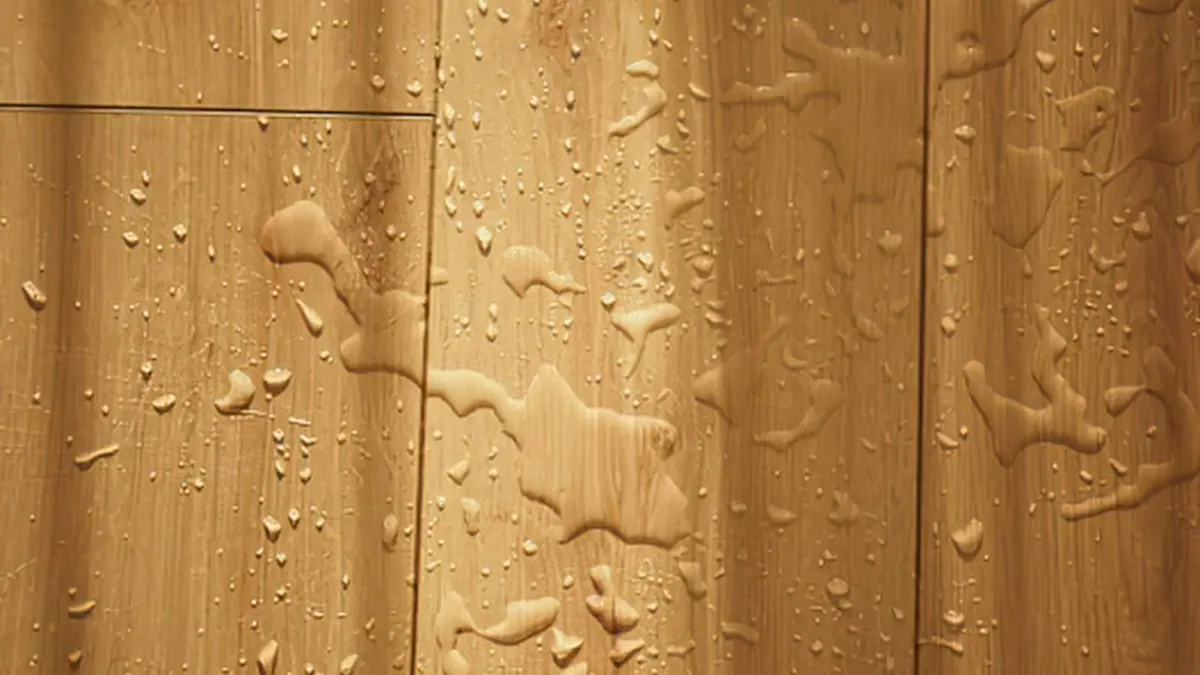
How do you know water got under a wood floor?
Wood floor water damage in Laguna Beach, CA usually shows itself in the boards before it shows anywhere else: edges curling up, seams opening, a dark patch, or a floor that feels springy underfoot. Wood absorbs moisture slowly and releases it slowly, so the damage can keep developing for days after the leak stops.
The first 48 hours matter most. The EPA advises drying water-damaged areas and items within 24 to 48 hours to prevent mold growth, and a wood floor with a wet subfloor is exactly that kind of area.
Signs of water in a wood floor, and what usually causes each
The pattern on the boards often points to the source. This is a guide, not a diagnosis.
| Sign | What it looks like | Common cause |
|---|---|---|
| Cupping | Board edges higher than the center | Moisture rising from below, such as a slab or crawlspace, or a slow supply leak |
| Crowning | Board centers higher than the edges | Floor dried too fast, or cupped boards that were sanded while wet |
| Buckling | Boards lift off the subfloor | Heavy, prolonged wetting, often a burst line or a flood event |
| Gaps between boards | Seams opening after the floor dries | Boards that swelled, then shrank, after a leak |
| Dark or black stains | Gray, black or blue-black spots | Long contact with water, often near fixtures or under mats |
| Soft or spongy spots | Boards give when pressed | Rotting wood or a weakened subfloor |
| Musty smell | Odor with no visible damage | Damp wood or a cavity holding moisture below the floor |
Several signs together point to a bigger water problem than any one alone. A musty smell next to cupped boards deserves a moisture reading, not a guess.
What to do in the first 48 hours
Order matters. Do these in sequence.
- 1
Stop the water
Close the fixture shutoff or the main valve. If the source is outside, such as a roof or a neighbor's unit, note it and report it right away.
- 2
Make it safe
Cut power to wet areas only if you can reach the panel without standing in water. Never touch wet electrical equipment, and keep pets and children off the floor.
- 3
Lift and wipe
Take off rugs and furniture. Mop standing water with towels and run fans and air conditioning to move air.
- 4
Document everything
Photograph the floor from several angles with dates, and write down when you first noticed it. Keep a log of calls with your landlord or insurer.
- 5
Get it measured
Call for a moisture assessment. Wood can feel dry while the subfloor and the cavity below are still wet.
Electrical and slip warning
A wet wood floor is slick, and water near outlets, baseboard heaters or appliances can shock. If water is pooling around electrical equipment, stay out and cut power at the panel only when you can do so dry.
How moisture is measured under the boards
Eyes and hands miss most of it. A crew uses a pin or pinless moisture meter on the boards, then checks the subfloor and the framing, and a thermal imaging camera shows cool, wet areas in a pattern. The readings go on a map of the room so the same spots can be re-checked each day.
Where boards are tight, a meter may be run at the edges and any exposed ends. Some jobs call for drilling a small hole at a baseboard or lifting a single board to see the cavity under it. The goal is a number for each location, not an impression.
Daily readings tell you when the floor is dry, not the calendar. Equipment comes out only when the readings reach the target for that wood, as described under our water mitigation service.
What drying can reverse, and what it cannot
Drying can bring back flatness in many cupped and mildly swollen boards, and it can save a subfloor that was wet for a short time. It can often prevent the moisture from reaching walls and cabinets.
Drying cannot reverse dark staining that has soaked into the grain, rot, or boards that have split or buckled. It cannot rejoin delaminated engineered layers either. Those boards are replaced, and the repair side of the job is covered by our water damage repair page.
If the water was from a sewer backup or a flood, the answer changes again, because contaminated water in wood is not something you can clean out. The cleanup work for those cases usually removes the affected flooring.
Not sure what you are looking at?
Call the 24/7 line. We describe what the crew will measure and explain the scope and price before work starts.
What Laguna Beach homeowners should know about documentation
Census QuickFacts lists the median value of owner-occupied homes in Laguna Beach as 2,000,000+ dollars, the top reporting bracket. With that much value tied up in the structure, homeowners and insurers both expect clear before-and-after records of any loss.
Practically, that means dated photos of the floor, a note of when you first saw damage, and written moisture readings from the crew at the start and at the end. Keep them together in one folder. If a claim is made, those records show the extent of the damage and the day it was found.
Towns close to Laguna Beach face the same floors
Floors in Dana Point homes show the same cupping and staining patterns after a leak, and our crews dispatch there too. The advice above applies unchanged.
The same goes for Laguna Woods, where we also cover floors for homeowners and tenants. In every town the first call should come before any repair guesses.
Frequently Asked Questions
How can I tell if my wood floor is wet underneath?
Look for cupping, a musty smell, or a cold spot that thermal imaging picks up. A moisture meter on the boards and the subfloor gives real numbers. Surface feel alone is unreliable.
Should I use a fan or a dehumidifier on a wet wood floor myself?
Fans and an air conditioner can help in the first hours, but home equipment often dries the surface faster than the core. Too much heat or speed can crack boards. A crew measures and paces the drying so the wood does not warp more.
Is it normal for a floor to cup after a leak?
Yes. Cupping is one of the most common reactions, and it is often what first alerts people to hidden moisture. If the underside stays wet, the cupping can get worse.
How long before mold can grow on a wet wood floor?
The EPA says to dry water-damaged areas within 24 to 48 hours to prevent mold growth. Mold needs moisture, so drying the cavity under the boards is the main step. If you see growth, call before you scrub it.
I own a Laguna Beach home worth well over a million dollars. Does that change how I document water damage?
It raises the stakes. Keep dated photos, written moisture readings, and a log of calls with your insurer, and check your policy for how sudden versus gradual leaks are treated. Clear records from the start make later conversations simpler.