
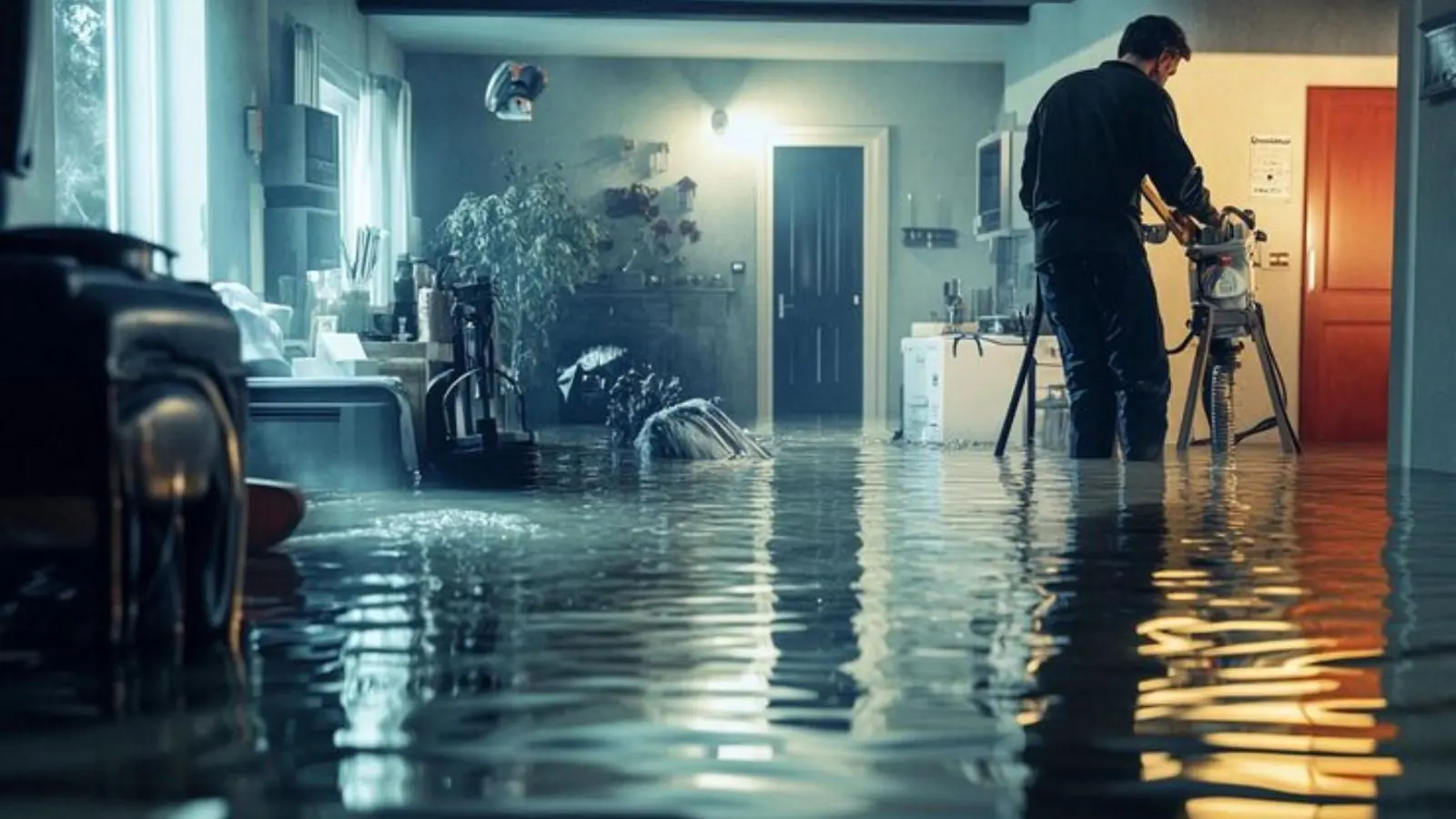
What water mitigation means
Water mitigation is the work of stopping water damage from getting worse: finding the source, removing the water, and drying the structure before materials fail. In Laguna Beach, CA, it is the first phase of any wet-home job and it comes before repairs or rebuilding. The goal is simple. Keep the loss as small as the situation allows.
Mitigation is not plumbing repair, waterproofing or roof work. A plumber fixes the pipe. We deal with what the water already did to drywall, flooring, cabinets and framing.
My wall feels damp and the carpet is squishy: what now?
A damp wall, squishy carpet, a musty smell inside a cabinet or a ceiling stain that keeps growing all point to the same thing. Water is in a place you cannot see, and it is still moving. Wiping the surface or running a household fan rarely reaches it.
The trade name for the fix is water mitigation. A crew traces the moisture with meters and a thermal imaging camera, removes what cannot dry, and sets drying equipment that pulls moisture out of the structure itself. Our water damage cleanup crews handle the sanitizing and clearing that often follows.
Why an active leak is an emergency in the first 24 to 72 hours
Call now, even if it is two in the morning. Our dispatch line is open 24/7 and we send crews on a same-day basis when available. Waiting for daylight is how a small leak becomes a wall rebuild.
The EPA advises drying water-damaged areas and items within 24 to 48 hours to prevent mold growth. Drywall wicks water upward, wood floors cup, and insulation holds moisture like a sponge. Each day adds more wet material to the job.
Mold needs moisture to grow, so drying speed is the only lever you control.
What you can do while you wait
These steps protect your home and your safety until the crew arrives.
Stop the source
Close the fixture shutoff valve or the main water valve. If you cannot find it, say so on the call and we will talk you through it.
Cut power only if safe
Switch off breakers for wet rooms only if the panel is dry and you are standing on dry ground. Otherwise stay back and call.
Lift what you can
Move rugs, books, electronics and small furniture to dry spots. Put foil or wood blocks under furniture legs.
Photograph everything
Take photos and short video of the water, the damage and the source before anything is moved. Your insurer will ask for them.
Keep people out
Keep children and pets away from standing water, especially if it came from a drain, toilet or washing machine overflow.
Electricity and water do not mix
Do not touch outlets, cords or appliances if they are wet or you are standing in water. Ready.gov advises turning off electricity only if it is safe to do so. If the breaker panel is wet or the floor around it is flooded, leave it alone and call us. A licensed electrician may need to clear it first.
Structural Drying
Structural drying is the part most homeowners never see. It starts with moisture meters pressed against drywall, baseboards and subfloors, plus a thermal imaging camera that shows cool, wet areas behind finished surfaces. The crew maps what is wet and records starting readings.
Then the equipment goes in. Air movers push dry air across wet surfaces to lift moisture off them. LGR dehumidifiers (low grain refrigerant units) pull that moisture out of the air so it stops settling back into the walls. Where water is trapped in a wall cavity or under hardwood, injectable drying uses small holes and a hose to push dry air into the closed space.
Drying goals are checked every day. The crew compares fresh readings to a dry reference for the same material and moves or removes equipment as areas reach their goal. Most structural drying runs about three to five days, though a wet crawl space, thick framing or a Category 3 loss can run longer, and we will not promise a number for your home until we have read the moisture.
Water categories and what we do about each
The category of the water controls how much material is removed and how the area is cleaned. A crew identifies it on arrival.
| Category | What it means | What is done |
|---|---|---|
| Category 1 | Clean source, such as a supply line, faucet or tub overflow | Extract, set air movers and LGR dehumidifiers, dry in place when materials are still sound |
| Category 2 | Used water, such as a washing machine or dishwasher discharge, or an aged Category 1 loss | Extract, remove porous materials like carpet pad, clean and treat, then dry |
| Category 3 | Grossly contaminated, such as sewage or floodwater | Remove affected porous materials, disinfect surfaces, dry the structure, and keep people out until cleared |
Clean water that sits for a couple of days can slide from one category to the next, which is one more reason not to wait.
Not sure how far the water went?
Describe what you see on the call. We will explain what to check and send a crew.
Where Laguna Beach water losses start
Laguna Beach is mostly small homes on steep lots, and the City's Housing Element notes steep hillside terrain and an aging housing stock. In practice that often means older supply lines in tight crawl spaces and slab walls where a leak can run for days unseen. Ask a crew to check the low side of the house, since water follows gravity downhill.
Most of the city gets water from Laguna Beach County Water District, while South Laguna is served by South Coast Water District. Knowing which one is yours tells you who to call about the meter shutoff, and our emergency water removal page covers that in detail.
What shapes the cost of mitigation
We explain scope and price before work starts. These are the factors that move the number.
Water category
Clean water needs less removal than Category 2 or 3, where porous materials often come out.
Area affected
Rooms, floors and wall height all change how much equipment and labor are needed.
Materials involved
Hardwood, tile over slab, carpet and drywall each dry at different rates, and some cannot be saved.
Drying days and equipment
More air movers and dehumidifiers running more days means a larger equipment line.
Rebuild scope
Mitigation ends when the structure is dry. Replacing drywall, flooring and paint is separate work. See our water damage repair page.
Insurance and documentation
Sudden and accidental water damage, like a burst pipe, is often covered by a homeowners policy. Gradual leaks and neglect often are not, and flood is usually excluded and needs separate flood coverage. Check your policy and ask your insurer what applies.
The California Department of Insurance advises making temporary repairs to prevent further damage, since a policy may not cover ensuing damage if you did not take reasonable steps. It also suggests keeping a log of calls and copies of correspondence. Want your real number? Call, and we will walk through the scope with you.
Local help and honest limits
We dispatch from 465 Forest Ave in Laguna Beach and serve Laguna Beach and nearby towns, including Laguna Niguel. The crews we send are licensed and insured. You can check any contractor's license on the California Contractors State License Board website.
If mold has already started, our mold remediation service follows S520 practice. Ask any company whether its crews work to the S500 water damage standard too.
Frequently Asked Questions
Do you handle water mitigation emergencies at night or on weekends in Laguna Beach?
Yes. Our dispatch line runs 24/7, including nights, weekends and holidays. Call and tell us what is happening, and we send a crew on a same-day basis when available. We do not promise an exact arrival time, because it depends on the call volume and where the crew is coming from.
How long do air movers and dehumidifiers need to run?
Most structural drying runs about three to five days. The crew checks moisture readings daily and removes equipment as each area reaches its dry goal. Thick framing, hardwood or a Category 3 loss can take longer.
We do not rent equipment to homeowners. Drying equipment is placed, monitored and removed by the crew.
What documentation does my insurer need after a water loss?
Photos and video of the damage before cleanup, a list of damaged items, and moisture readings and drying logs from the crew are all useful. Keep a log of calls and copies of any letters, as the California Department of Insurance suggests. Ask your insurer what it requires for your policy.
What does water mitigation cost?
We do not quote numbers over the web because each loss differs. Cost depends on the water category, area affected, materials, drying days and equipment, and rebuild scope. Call and we will explain the scope and price before work starts.