
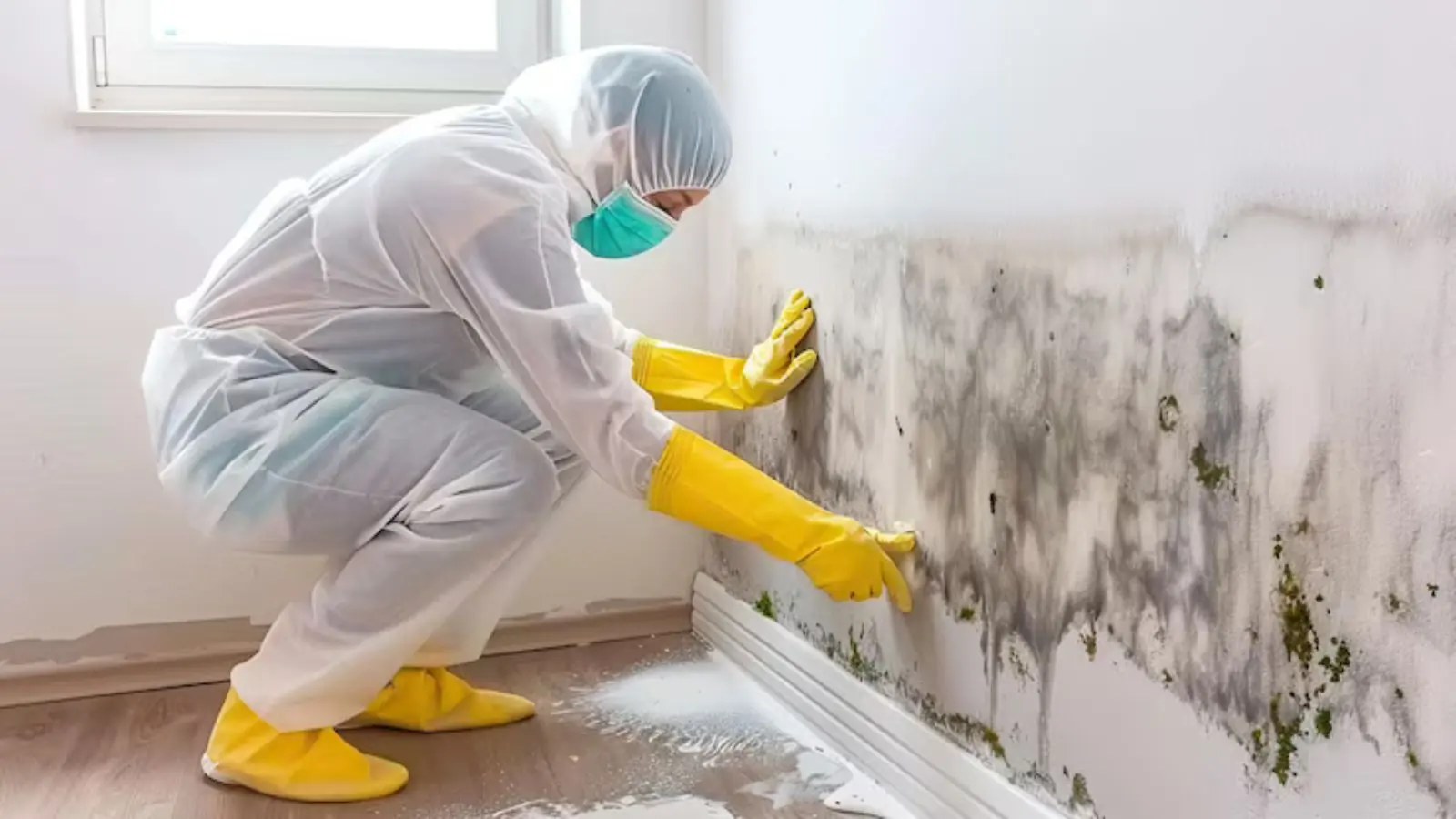
What mold remediation means
Mold remediation in Laguna Beach, CA is the containment and removal of mold growth from a building, followed by drying and cleaning of the area so the moisture that fed it is gone. Reputable crews follow ANSI/IICRC S520, the published industry standard for mold remediation.
Mold needs water. The EPA says none of the many types of mold will grow without water or moisture, and that the key to mold control is moisture control. That is why the work always has two parts: take out what is affected, and find out why it got wet.
A musty smell, dark spots or a damp closet ceiling: now what?
Callers usually start with something small. A stale smell when the closet door opens, speckled spots in a shower corner that return after scrubbing, or a soft wet patch on the ceiling under an upstairs bathroom. Sometimes it is only a stain on baseboard behind a toilet.
Those signs point to moisture somewhere in the wall, floor or ceiling. The trade that deals with it is mold remediation, and the first step is working out where the water is coming from and how far it spread.
Please don't sand, bleach or open the wall yourself before someone assesses it. Disturbing growth can spread spores across the room. Call the 24/7 line and describe what you see.
Mold Removal and Black Mold Cleanup
Dark patches get called black mold, but color alone does not identify a type, and we do not diagnose by sight. Whatever the shade, the method is the same: seal off the room, remove affected material, clean what remains and dry it.
Containment starts with plastic sheeting taped across doorways and vents, with a zippered entry. A machine with a HEPA filter, called an air scrubber, pulls room air through the filter. It also holds the space under negative air pressure, meaning air flows into the work area instead of leaking out to the rest of the home.
Porous items like drywall, insulation and carpet pad that carry growth are bagged and removed. Hard surfaces such as studs are cleaned, using HEPA vacuums and damp wiping with detergent, in line with the EPA's advice to scrub with detergent and water and dry completely.
Afterward the crew checks moisture again before anything is rebuilt. Health questions about exposure belong with your physician.
Mold After Water Damage
The EPA advises drying water-damaged areas and items within 24 to 48 hours to prevent mold growth. When a pipe burst on Friday and nobody noticed until Monday, that window is already at risk. Fast extraction and drying through water mitigation is the best way to stay ahead of it.
The leak must be fixed first. A plumber should repair the toilet supply, sink trap, AC condensate line, or the roof flashing or siding gap letting rain in. We restore and remediate. We do not repair plumbing or roofs, and removal on top of an active leak only sets up a repeat.
Once the source is stopped, the crew dries the area with air movers and an LGR dehumidifier and confirms the numbers with a moisture meter. Some walls hold hidden dampness, which is why a thermal imaging camera is used to scan before anything is closed back up.
If the affected area needs rebuilding, water damage repair picks up where removal ends.
Mold Testing and Inspection
An inspection looks at where moisture entered, which materials are damp, and where visible growth sits. The inspector uses a moisture meter, a thermal imaging camera and a flashlight, and checks the likely sources, such as a toilet seal, a sink supply, a condensate line, an attic roof penetration or a sidewall near a window.
Air or surface sampling is a separate step, and independent clearance testing after remediation is done by a separate party, not the crew that did the removal. That separation is the point: the person who checks the result has no stake in the work.
Some homeowners also hire an independent consultant before a remodel or a home sale. If bird droppings turn up in an attic or gutter space while a remodel is being gutted, the crew flags them so the plan can account for them.
Which situation do you have?
The approach changes with how the moisture arrived. Here is how the three common cases usually compare.
| Situation | What we look for | Typical approach |
|---|---|---|
| Visible surface mold | Small spots on tile, caulk or paint, with a known cause | Fix the source, containment if needed, clean and dry, then monitor |
| Hidden moisture | A smell, staining, or a damp wall with no visible growth | Meter and thermal scan, open the wall at the wettest point, then scope the removal |
| After a flood or major leak | Wet materials left more than a day or two | Extraction first, then removal of porous materials, containment and air filtration |
Flood is usually excluded from standard homeowners policies. Check your policy for how your situation is classified.
Smell something but see nothing?
That is common with hidden moisture. Call and describe the room and we will explain how an inspection would proceed.
What affects the price of mold work
We don't post numbers because mold jobs differ so widely. These factors set the scope.
Size of the affected area
One closet wall and a whole bathroom ceiling require different amounts of containment and hauling.
Materials involved
Porous drywall and insulation are removed. Studs and subfloor are cleaned, which takes less material but more labor.
Containment and air filtration
Larger or multi-room jobs need more sheeting, more HEPA units and more days of equipment.
Access and height
Attics, crawlspaces and high ceilings take more setup time than a ground-level wall.
Rebuild afterward
Removal leaves open framing. New board, paint and flooring are priced separately once scope is clear.
Insurance, licensing and a local note
Insurers often cover sudden and accidental water, and mold that follows it may be handled differently depending on the policy. Gradual leaks are often excluded. Check your policy or ask your insurer, and keep a log of calls.
Ask any company whether its crews work to S520, and ask whether your state licenses mold work. The California Contractors State License Board lets you look up any contractor's license on its website.
For hillside homes or properties near Laguna Niguel and other nearby towns, the same rule applies: new seepage on a wall or a growing damp patch should be assessed early. We scope and price the work before it starts.
Frequently Asked Questions
How much notice do you need for an inspection?
Call the 24/7 line and we will explain scope and next steps.
Do you offer same-day service?
We offer same-day response when available. The dispatch line runs around the clock, so call whenever you notice a problem.
Will an independent clearance test help for a home sale or loan?
Many buyers, sellers and lenders ask for documentation that remediation finished and the area is dry. An independent third party takes the samples and writes the report. We make no promise about what any lender or buyer will accept, so ask them directly.
Keep any written results, since they help show the work was completed.
Can I clean the mold myself?
The EPA says hard surfaces can be scrubbed with detergent and water and dried completely, but larger or hidden growth is better left to a crew. The moisture source has to be fixed either way.
Does the mold have to be tested before removal?
Not always. Visible growth can be removed without sampling. Testing is useful when you want documentation or the source is unclear. Health questions belong to a physician.
What does mold remediation cost?
It depends on the area, the materials, the containment and the equipment days. We explain scope and price before work starts. Call and describe the room.