
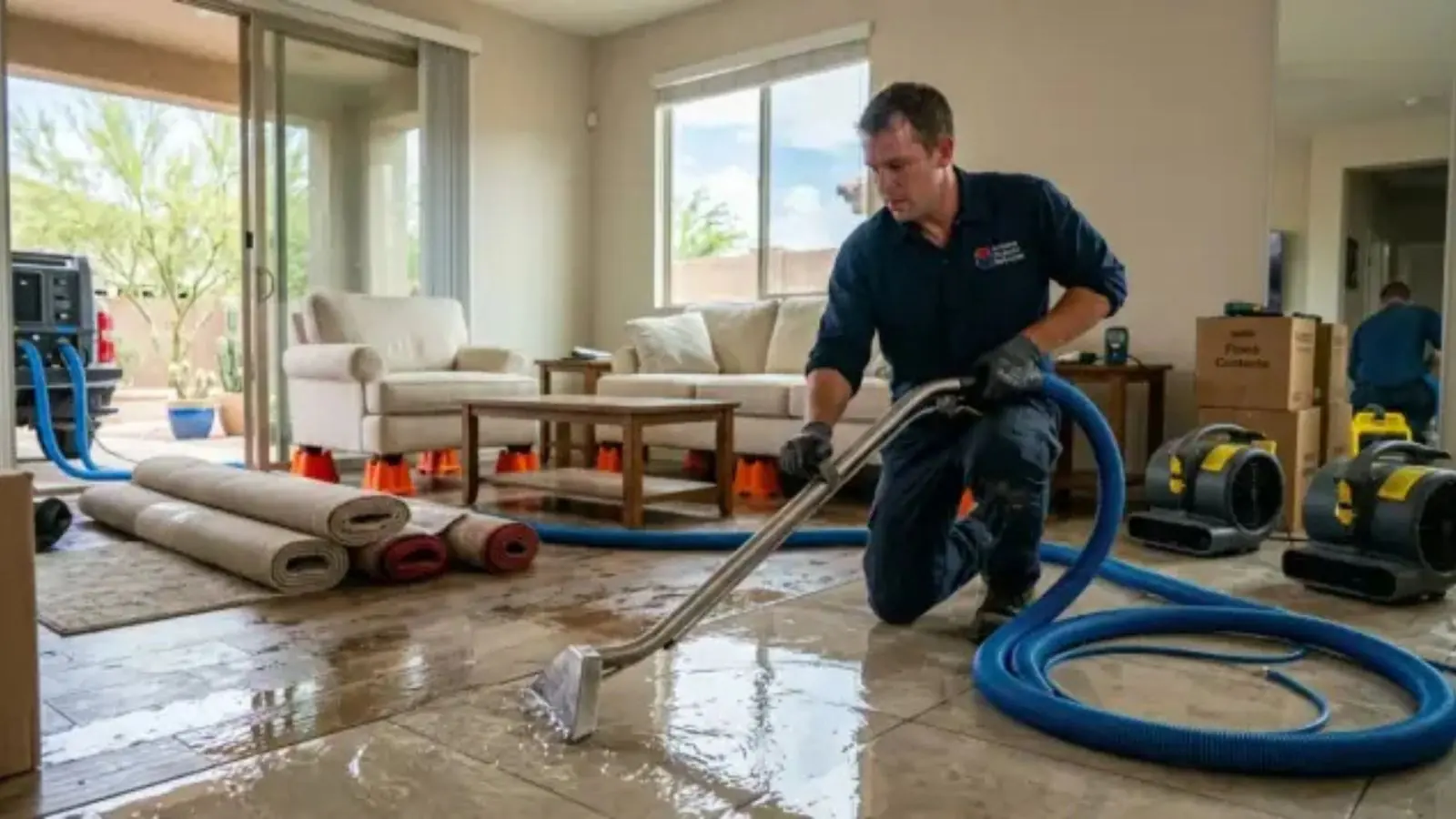
Pulling standing water out of a Laguna Beach home
Emergency water removal is the extraction of standing water from floors, basements, garages and crawl spaces using pumps and extraction units. In Laguna Beach, CA, it is the job you need when water is pooled, not just damp. The sooner it comes out, the less of it reaches drywall, cabinets and subfloor.
Call the 24/7 line, tell us where the water is and how deep it looks, and a crew goes out on a same-day basis when available. We will not promise an exact arrival time, but we will tell you what to do in the meantime.
When standing water is an emergency
Any water you can see sitting on a floor is a problem. Water that is spreading toward other rooms, rising, or coming from a sewer line is an emergency. Do not wait for office hours, because water keeps moving into baseboards, subfloors and cabinet bases while you do.
While you wait for the crew, stop the source if you can. Lift rugs, bags and electronics off the floor. Stay out of the water if you cannot tell where it came from, and keep children and pets back. Ready.gov warns against touching electrical equipment if it is wet or you are standing in water.
Burst Pipe Water Damage
A burst pipe under a sink, a split washer hose, a failed water heater or a cracked main line can flood a room quickly. The first move is the same in every case. Shut off the main water valve, then open a faucet at the lowest point to drain the lines.
Not sure where the valve is? It is often on an outside wall, in the garage or near the water heater. If it will not turn, the utility meter shutoff is the backup. Laguna Beach County Water District serves most of Laguna Beach, while South Coast Water District serves South Laguna, so ask the one for your address about the meter.
Once the water is off, the crew pumps or extracts what has pooled. A burst supply line is usually clean water, but a washer or dishwasher discharge may be Category 2. Either way, extraction is only the start, and wet walls need drying. Our water mitigation crews set the equipment for that.
Power, panels and sewage
If water is near the electrical panel, outlets or appliances, do not touch them. Leave the breakers alone unless the panel is dry and you are standing on dry ground. If the water smells like sewage or came up through a drain or toilet, treat it as contaminated: stay out, keep pets out, and wear boots and gloves if you must enter.
Crawl Space and Standing Water
Crawl spaces collect water from burst lines, drain leaks and heavy flows that find a low spot. Callers also report whole-house flooding, where an inch or two covers every room. Both need extraction, but the tools differ.
A truck-mounted or portable extraction unit pulls water from carpet and large floor areas. Submersible pumps move deeper water out of crawl spaces and low areas. Wet vacuums handle corners, thresholds and shallow pools. Crawl spaces are tight, so crews often work on their bellies with a pump and a hose run outside.
We make no promise on speed because depth, access and how much water there is all change it. What we can say is that a crew will tell you the plan before starting. Standing water in a crawl space also feeds humidity under the house, so drying the framing follows extraction.
Which extraction method fits your water
This is a general guide. The crew confirms on arrival.
| How deep or widespread | Extraction method | What is needed next |
|---|---|---|
| A shallow puddle in one room | Wet vacuum | Moisture readings, then drying of baseboards and subfloor edges |
| Wet carpet across rooms | Portable or truck-mounted extraction unit | Decision on pad removal, then air movers and dehumidifiers |
| Several inches across the house | Submersible pump, then extraction unit | Cut-outs of wet drywall, full drying setup, and cleanup of materials |
| Water in a crawl space | Submersible pump with outside discharge hose | Drying of framing and subfloor, and a check for the source |
| Sewage or drain backup | Pump or extraction, with protective gear | Removal of porous materials, disinfecting, and drying |
Extraction removes the water you can see. It does not dry the wall cavity or the subfloor.
Tell us what you are seeing
Depth, location and source help us send the right equipment.
What drives the cost of water removal
We explain scope and price before work starts. These factors shape it.
Depth and volume
More water and a larger area take longer and need more or bigger equipment.
Water category
Clean supply water is simpler than gray or sewage water, which needs protective gear and disposal of materials.
Access
A tight crawl space, a basement stair or a gated driveway changes how pumps and hoses are run.
What follows
Drying, cleanup and rebuild are separate from removal. See flood damage restoration for larger losses.
Insurance and what removal does not cover
Sudden and accidental pipe failures are often covered by homeowners insurance, while gradual leaks often are not. Flood is usually excluded and needs separate flood coverage, which the California Department of Insurance says typically starts 30 days after signing. Check your policy and ask your insurer.
Photograph the water before it is removed, and keep a log of calls. We remove water and dry structures. We do not fix pipes or waterproof foundations, so you will need a plumber for the source. Want your real number? Call. For a loss near Dana Point, see our Dana Point service page.
Frequently Asked Questions
Do you handle emergency water removal at night or on weekends in Laguna Beach?
Yes. The dispatch line is open 24/7, so a Saturday night pipe burst gets the same call handling as a weekday morning. We send a crew same-day when available and will not quote an exact arrival time over the phone.
What should I do before the crew gets there?
Shut off the main water valve if the source is a pipe. Lift valuables off the floor, keep people and pets out of the water, and stay away from wet outlets and the panel. Photograph the damage first.
Can you remove water from a crawl space?
Yes, with a submersible pump and a discharge hose run outside. Access matters, so tell us about the crawl space door and any tight spots when you call.
Does extraction mean my home is dry?
No. Extraction takes out standing water, but moisture stays in drywall, baseboards and subfloor. Drying with air movers and dehumidifiers usually follows and is checked with moisture meters.
How much does emergency water removal cost?
It depends on water depth, category, area affected and access. We do not quote numbers over the web, but we explain scope and price before work starts.