
The whole job in one paragraph
Water damage restoration in Laguna Beach, CA follows nine stages: the call, safety and source control, inspection with moisture mapping, water extraction, drying, cleaning and sanitizing, monitoring, repair, and a final check. The first six or seven stages are called mitigation and the last two are repair. Most delays come from skipping or rushing the early stages.
Below, the stages are grouped into five steps. After the steps you will find a table that lists who does what at each stage, including you.
The five steps, in order
Each step builds on the one before it. Skipping ahead is how wet drywall ends up painted over.
- 1
Call and make it safe
You phone the 24/7 line and describe the water. Close the main water valve if the source is a pipe, lift valuables off wet floors, and keep power off in wet rooms only if you can reach the panel without standing in water.
- 2
Inspect and map the moisture
The crew walks the house with moisture meters and a thermal imaging camera. Readings are marked on walls and floors so everyone can see where the water went, including places that look dry.
- 3
Extract and remove
Extraction units pull standing water and wet carpet pad is lifted. Material that cannot be dried, such as soaked insulation or sewage-contaminated drywall, is cut out and bagged.
- 4
Dry, clean and monitor
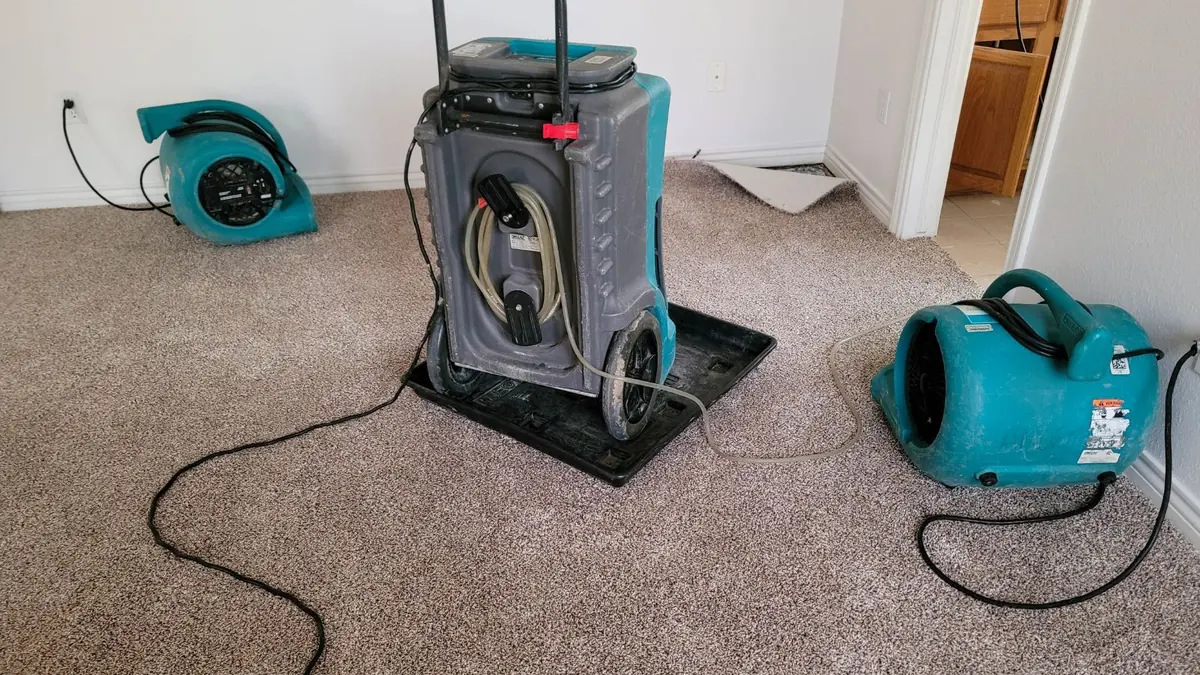
Air movers and LGR dehumidifiers run for days while the crew returns to take readings. Surfaces are cleaned and sanitized, and equipment stays until the readings reach the dry target.
- 5
Repair and final check
Once the structure is dry, drywall, flooring and paint are rebuilt. A closing walkthrough compares the final readings and the finished work against the scope you agreed to.
Why the order matters
Drying has to finish before repairs begin. Closing a wall over damp framing traps moisture, and the EPA says mold needs water and that water-damaged areas should be dried within 24 to 48 hours. Rebuilding first and drying later is the expensive way to do this job twice.
This is why the crew tracks readings and not appearances. A baseboard can look fine while the cavity behind it is still wet. Our water mitigation page covers the drying phase in more depth.
Ask for the readings in writing at the end. A crew working to ANSI/IICRC S500, the published standard for water damage restoration, will record starting and ending moisture numbers for each material. You can ask any company whether its crews work to that standard.
Stage by stage: what happens and what you do
The right column is your part. Nothing in it needs special skills.
| Stage | What the crew does | What you do |
|---|---|---|
| 1. The call | Dispatcher gathers the water source, rooms affected and access details | Describe what you see and answer questions |
| 2. Safety and source control | Confirms the source is stopped and hazards are handled | Shut the main valve, keep everyone out of contaminated water |
| 3. Inspection and moisture mapping | Meters, thermal camera, written scope | Walk through with the crew and point out past leaks |
| 4. Extraction | Pumps and extractors remove water, wet materials come out | Photograph items before they leave |
| 5. Drying | Air movers and dehumidifiers placed and run | Keep doors and equipment undisturbed, do not unplug units |
| 6. Cleaning and sanitizing | Hard surfaces and contents cleaned | Decide what to keep or discard |
| 7. Monitoring | Daily moisture readings, equipment adjusted | Allow access for each visit |
| 8. Repair | Drywall, flooring, paint rebuilt | Approve finishes and any scope changes |
| 9. Final check | Readings and finished work reviewed | Walk the house, raise anything that looks off |
Insurance steps run beside these stages. Call your insurer early, keep a log of calls, and ask whether repairs need their approval.
What Laguna Beach homeowners should know about access and equipment
The City of Laguna Beach Housing Element says steep hillside terrain shapes development here, and it reports that 71.3 percent of the 13,027 housing units counted in 2020 were one-unit homes. Many of those homes sit on narrow hillside streets, up long driveways or past stairs.
So when you call, mention a steep street, a narrow driveway or stairs-only access. The crew can then plan how to carry extractors, hoses and dehumidifiers, and which equipment sizes suit the house. This is planning information only, and it has no bearing on arrival time.
Start with a call
Describe the water and the access, and we will explain what the first hour looks like.
Where repair fits
Many people expect restoration to end when the fans leave. It does not. The rebuild is its own phase, covered on our water damage repair page, and it may include permits. The City of Laguna Beach says permits are required for repairing a building and for changes to electrical or plumbing systems. It does not say whether minor drywall repair needs one, so ask the Community Development Department.
Keep the scope in writing. Scope and price are explained before work starts, and any change should be confirmed before it happens.
Nearby towns, same sequence
If a relative in Laguna Niguel or a neighbor in Laguna Woods is dealing with a leak, the same nine stages apply. Only the access details change, such as a gated community or an upper-floor unit.
Frequently Asked Questions
What is the first thing I should do after finding water damage?
Stop the source if you can, which usually means the main water valve. Then keep people out of any water that may be contaminated and call the 24/7 line. Photos can wait until the area is safe.
Do I need to move furniture before the crew arrives?
Lift what you safely can, like small furniture and electronics, onto dry surfaces. Leave heavy pieces. The crew will move them and tell you what stays.
Will walls be opened during the job?
Sometimes. If the thermal camera and meters show water trapped inside a wall, small holes or removed baseboards give air access. Injectable drying is an option when it fits the material.
Can I stay in the house during restoration?
Often yes, with noise from air movers and dehumidifiers. If the water was Category 3 or the power is out in key rooms, the crew may advise staying elsewhere.
Who do I tell about a steep driveway or stairs-only entry in Laguna Beach?
Tell the dispatcher on the first call. It helps the crew plan hose runs and which equipment fits through the door. Include the street name and any parking limits.