
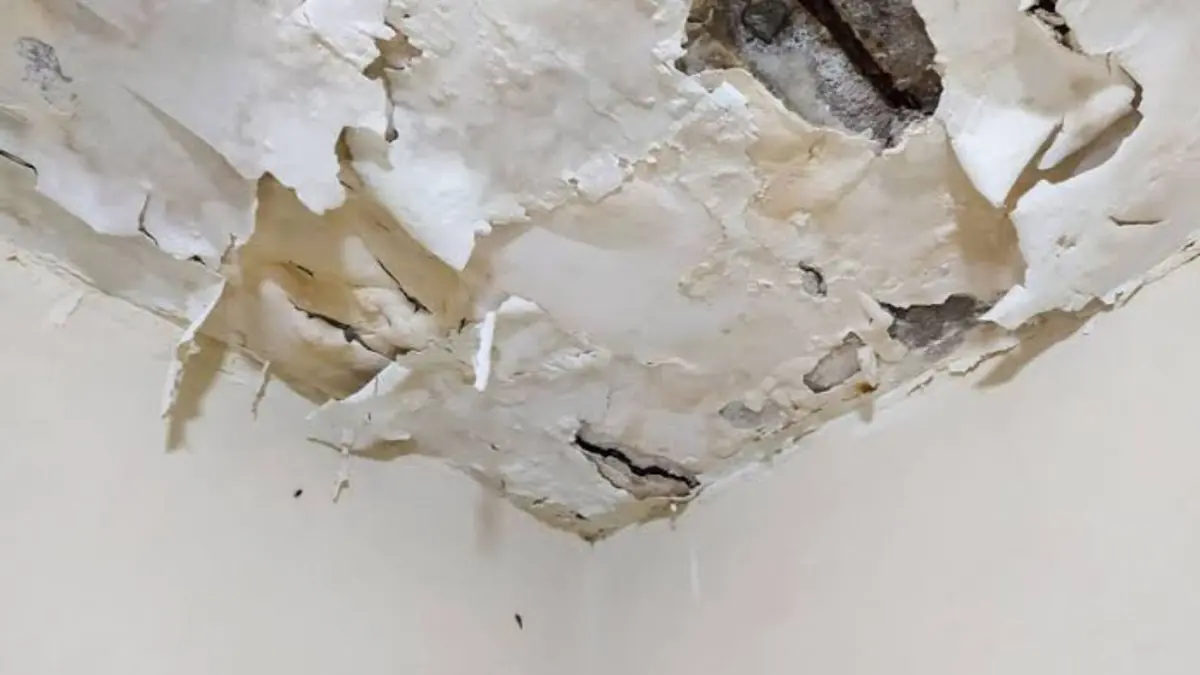
Why a ceiling has no single repair price
Water damage ceiling repair cost depends on how much material is wet, what the water carried, and how much has to be rebuilt and finished. Two ceilings with the same size stain can need very different work. One may only need drying and a patch, the other may need the drywall, insulation and texture replaced.
This page explains the factors without quoting figures, because any number given without seeing the ceiling is a guess. A real answer comes from a moisture reading and a look into the cavity above.
Safety first
A bulging or sagging ceiling can hold a lot of water and may fall without warning. Stay out from under it, keep people and pets away, and shut off power to that area only if you can reach the panel without standing in water. A small hole can drain it, but let a crew decide.
Cost factors for a water-damaged ceiling
Each row changes the scope. Together they explain why estimates differ.
| Factor | What it changes |
|---|---|
| Source of the leak | A supply line, roof leak or upstairs drain each calls for different repair and a different place to open up |
| Water category 1, 2 or 3 | Clean water may be dried in place, contaminated water means removal of porous material |
| Drywall versus plaster | Drywall sections are cut out and replaced, plaster is slower to dry and harder to patch |
| Texture and paint matching | Popcorn, knockdown or smooth finishes need blending across the whole ceiling plane |
| Insulation in the cavity | Wet insulation holds water and is often replaced |
| Access to the cavity | Low attics, tight crawl spaces or finished rooms above add labor |
| Drying days and equipment | More air movers, dehumidifiers and days on site raise the drying portion |
| Fixtures, fans or wiring | Lights and fans must be removed, tested or replaced by the right trade |
| Unit above | Another household's plumbing means more coordination and sometimes more rooms |
None of these are dollar amounts. Your written scope will show which factors apply to your ceiling.
Start with the source and the water category
A pinhole in a copper supply line sends clean water through the ceiling. A failed toilet supply or a washer drain above sends water that may be contaminated. Crews classify it as category 1, 2 or 3, and the category decides what can be dried in place and what must be removed.
Clean-water ceilings can sometimes be dried with the drywall left on, using injectable drying and air movers. Contaminated ceilings usually lose the wet drywall and insulation. If water is still coming down, emergency water removal comes before any repair planning.
Drywall, plaster and texture: the finish decides more than you expect
Drywall that has sagged is usually cut out in a clean section and replaced. Plaster behaves differently. It can hold moisture longer and cracks when patched, so crews may open a larger area to keep the repair from showing.
Texture is the quiet cost driver. Matching a knockdown or popcorn finish means feathering the new texture past the patch, and paint often has to cover the whole ceiling so the sheen lines up. Ask whether your scope includes paint, texture and priming, or only the opening and closing of the ceiling.
Need the ceiling looked at today?
Call now. Dispatch is 24/7 and same-day response is available when crews are free.
Insulation, access and drying days
Insulation soaks up water like a sponge. Once wet it stays heavy against the drywall and keeps the cavity damp, so crews often pull it. The EPA advises drying water-damaged areas and items within 24 to 48 hours to prevent mold growth, which is why this step should not wait.
Access matters too. A ceiling under an attic with a clear hatch is faster to inspect than a vaulted ceiling with finished rooms around it. Moisture meters and a thermal imaging camera show how far the wet area runs before anything is cut.
Drying then takes equipment and days. After the readings return to normal, water damage repair rebuilds what was removed.
What Laguna Beach homeowners should know about leaks from the unit above
The City of Laguna Beach 2021-2029 Housing Element (a city planning document) counts 13,027 housing units in 2020. About 71.3 percent are one-unit homes, 11.7 percent are two to four units and 14.8 percent are five or more units. That puts more than a quarter of homes in multi-unit buildings, so a ceiling leak that starts in the unit upstairs is a real possibility here.
That changes your first calls. Notify your landlord or your association, and tell the upstairs neighbor if you can reach them. Photograph the ceiling before anything is opened, because the party responsible for the source may want to see it. Documentation before repair protects your side of the discussion, and your insurer may ask for it too.
What to do before you ask for a scope
Photograph the stain, the room above if you can see it, and any light fixture or fan in the affected area. Note the date you first saw it and whether it has grown. Do not paint over a stain, because it hides the evidence and can trap moisture.
Ask each company what the written scope includes: extraction, drying, demolition, insulation, drywall, texture, primer and paint. Compare scopes line by line, because a lower figure that leaves out finish work is not the same job. If a nearby home is involved, we also dispatch crews to Laguna Woods and Aliso Viejo.
Insurance and ceiling repairs
Sudden and accidental ceiling damage is often covered, while a slow leak that went unnoticed for months often is not. Check your policy and ask your insurer, and send them your photos and drying records. We cannot say what your policy will pay.
Frequently Asked Questions
Can a stained ceiling be fixed without replacing it?
Sometimes. If the water was clean and the drywall is dry and solid, it may only need stain-blocking primer, texture and paint. A moisture meter reading confirms it is dry before you cover anything.
If the material sagged, crumbled or smells musty, it usually has to come out.
Does the cost change if a light fixture is involved?
Yes. A fixture or ceiling fan in the wet area has to be removed and checked, and wiring that got wet needs the right trade before it is used again.
Turn off the circuit if you can do so safely and do not use a fixture with water in it.
Who pays if the leak came from the unit above?
That depends on the cause, your lease or association rules and the insurance involved. Notify your landlord or association, document the damage and ask your insurer how they handle it.
We repair and dry the damage and explain scope and price before work starts. We do not decide responsibility.
Is a collapsed ceiling an emergency?
Yes, for safety and for water. Stay clear, call, and expect the crew to remove debris and wet insulation, dry the cavity, and then plan the rebuild.
Our line is open 24/7 and a same-day response is available when crews are free.
I live in a one-story Laguna Beach home. Is a ceiling leak usually the roof?
Not always. Plumbing in the attic, an air conditioner drain line or a bathroom fan duct can also drip into a ceiling.
Roof repair is not something we do, so if the roof is the source, a roofer must fix it while we dry and rebuild the interior.