
A realistic range, not a promise
Most water damage restoration in Laguna Beach, CA splits into two clocks. The drying phase, also called mitigation, often runs a few days. The repair and rebuild phase that follows can take far longer, depending on what was removed.
No honest company can name the length of your job before an inspection. Moisture readings decide when drying ends, and those depend on the water, the materials and the building. What follows explains what to expect and why.
Typical phases and how long each one runs
These are general patterns. Your job may be shorter or longer.
| Phase | What happens | Usual time pattern |
|---|---|---|
| Extraction | Pumps and extractors remove standing water | Hours, often the same visit |
| Setup | Meters, thermal camera, air movers, dehumidifiers placed | Hours |
| Drying | Equipment runs while readings are checked daily | Commonly several days, longer for dense materials |
| Cleaning | Surfaces cleaned and sanitized | Part of the visit, or after drying |
| Repair | Drywall, flooring, paint, trim | Days to weeks, set by scope and material lead times |
The gap between the last two rows is the most common surprise. A room can be dry in days and still wait weeks for new flooring.
Why drying is checked every day
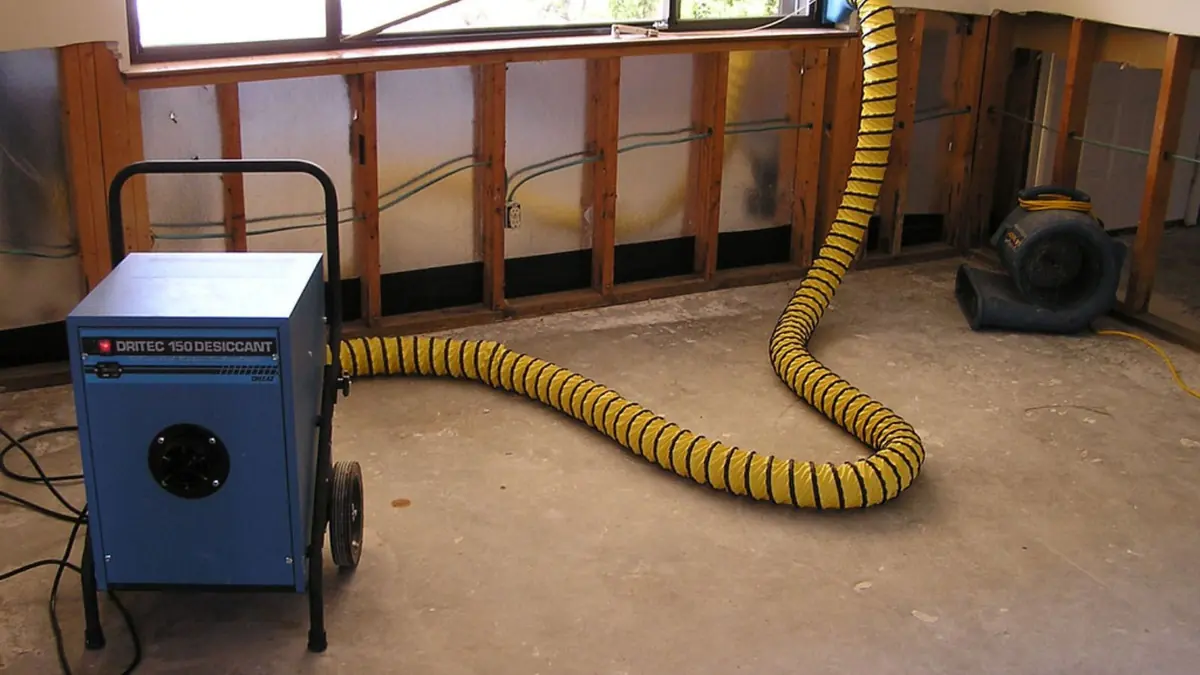
Drying is a measurement job. A crew returns each day with moisture meters and records readings from the same spots, then moves or removes equipment as areas reach target. The job ends when the numbers say so, not on a set day.
Speed matters because the EPA advises drying water-damaged areas and items within 24 to 48 hours to prevent mold growth. Mold needs moisture to grow, so a long wet period is a bigger risk than an extra day of equipment. If a spot stalls, the crew changes the plan.
Daily visits also give you a plain record. Each reading shows which areas have reached target and which have not, so you can see why equipment stays or goes. Industry practice here is published as ANSI/IICRC S500, and you can ask any company whether its crews work to it.
How water category changes the timeline
Category 1 water, from a clean supply source, is the simplest. Materials can usually be dried in place and the job moves toward repair quickly.
Category 2 adds cleaning and more removal. Category 3, which includes sewage and floodwater, adds more steps again: porous materials come out, framing is cleaned and sanitized, and drying starts only after the contaminated material is gone. That extra work lengthens the schedule.
What slows a job down
Each factor below can add time without any mistake on anyone's part.
| Factor | Why it adds time |
|---|---|
| Hidden wet insulation | Water travels into wall and floor cavities and must be found before it can be dried |
| Thick or dense materials | Hardwood, subfloors and plaster hold moisture and release it slowly |
| Cavity access | Small openings, cabinets or tight crawl spaces limit airflow |
| An ongoing leak | Drying cannot finish while water keeps arriving |
| Category 3 water | Removal and sanitizing come before drying |
| Waiting on a trade | A plumber, electrician or inspector may need to finish first |
Material by material
Drywall wet briefly with clean water can sometimes be dried in place, while insulation behind it usually cannot. Carpet over a pad often dries, but the pad itself is commonly replaced. Engineered flooring may cup or buckle and can need replacement even after drying.
Concrete slabs and hardwood take the longest to reach target readings. Injectable drying, where air is pushed into wall cavities through small holes, is one way crews speed up the stubborn spots. Our water mitigation crews choose the method after reading the moisture map.
What Laguna Beach homeowners should know about sewer laterals and drying
The City of Laguna Beach says private sewer lateral maintenance is the property owner's responsibility, running up to where the pipe connects to the public sewer, including the connection point. That matters for Category 3 jobs because a sewage backup from the lateral has to be cleared by a plumber before drying can finish.
If your drain is backing up, call a plumber about the lateral and call us about the wet structure at the same time. The City's Public Works and Utilities Department handles wastewater, and its page lists a plumbers' hotline for root clearing. Drying waits only on the clearing, so the sooner the lateral is fixed, the sooner the clock restarts.
Start the clock on drying
Describe the water and what it reached. The scope and price are explained before work starts.
Drying days versus rebuild time
Drying ends when readings reach the target. Rebuild time depends on how much came out, what the new materials are, who does the work and whether a permit is needed. Our emergency water removal crews handle the first hours, and the rebuild is planned afterward.
Ask the City of Laguna Beach Community Development Department whether your repair needs a permit, since the city page does not say for minor drywall work. Ask your insurer too, and keep a log of calls.
Nearby towns, same factors
The factors above apply just as much if you are comparing notes with someone in Aliso Viejo or Dana Point. The materials, the water category and any hidden moisture set the pace, not the town.
Frequently Asked Questions
Can I tell when the house is dry by touching it?
No. Surfaces can feel dry while the cavity behind them is not. Moisture meters and thermal imaging show what hands cannot, and the crew compares readings with dry reference points.
Why is equipment still running after several days?
Some spots, such as dense subfloors or insulated cavities, dry slower than the rest. The crew keeps equipment on those areas until readings reach target.
Does a sewage backup take longer than a pipe leak?
Usually yes. Removal and sanitizing come first, and the cause may need a plumber's repair before drying finishes.
How long does a sewer lateral problem hold up a Laguna Beach job?
It depends on how fast the lateral is cleared or repaired. Drying cannot finish while sewage keeps returning, so the plumber's visit sets the pace. Tell the dispatcher at the first call if drains are backing up.
Can I speed things up myself?
Yes, a little. Stop the source, keep doors to the work area closed, and leave equipment running. Unplugging dehumidifiers to save power slows the job.