
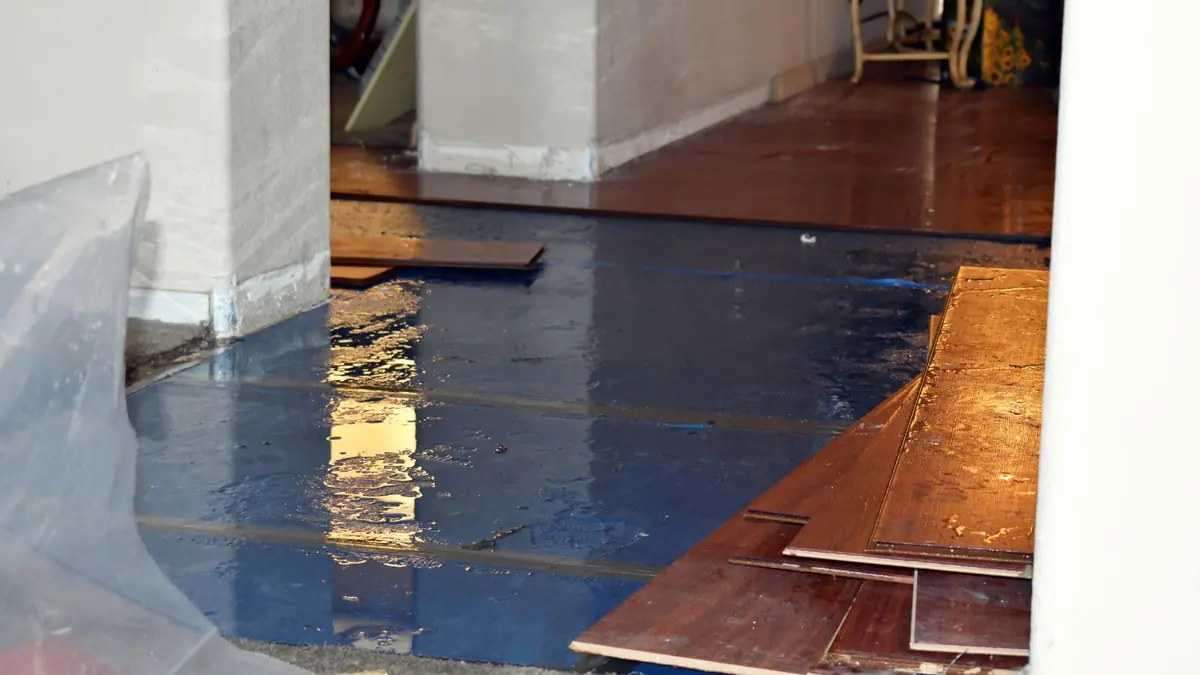
Can a water-damaged hardwood floor be repaired?
Often, yes. Hardwood floor water damage repair in Laguna Beach, CA means deciding between three outcomes: dry the floor and refinish it, replace only the boards that failed, or remove the floor down to the subfloor. The deciding factors are how long the wood stayed wet, what kind of water it was, and whether the boards are solid or engineered.
A floor that was wet for a day or two and dried with proper equipment has a good chance of being sanded and refinished. A floor that sat wet for a week usually needs board replacement at least. Water from a sewer backup or a flood is a different case, and the wood is normally removed.
What drying first changes about the repair
Repair choices come after drying, never before. Boards that look ruined on day one sometimes flatten out once the moisture content drops, and boards that look fine can hold water in the subfloor below. Sanding or sealing a floor that is still wet traps moisture and brings the cupping back.
That is why the first call is usually to a mitigation crew. The work described on our water mitigation page covers moisture mapping, extraction, and drying with air movers and dehumidifiers. Once readings are back near normal, the repair question becomes much easier to answer honestly.
Repair or replace: a decision table for hardwood
Use this as a starting point. The crew's moisture readings decide the final call.
| What you see | Likely path | Why |
|---|---|---|
| Mild cupping, floor dried within a few days | Dry, wait, sand and refinish | Boards often relax as moisture drops, and sanding levels what is left |
| A few boards stained black or split | Replace those boards | Dark staining runs deep, and sanding rarely removes it |
| Crowning after drying | Sand flat, then refinish | Crowned edges can be sanded level if the board is thick enough |
| Buckled boards lifted off the subfloor | Pull and replace the section | Buckling breaks fasteners, so the floor must be re-laid |
| Engineered plank with swollen or peeling layers | Replace the planks | The layers swell and separate, and drying does not rejoin them |
| Soft or spongy subfloor under the boards | Replace subfloor, then floor | A weak base fails again, whatever sits on top |
| Sewer backup or floodwater contact | Remove the affected flooring | Contaminated water soaks into wood and cannot be cleaned out of it |
Several rows can apply in one room. A kitchen floor might need sanding in the dining area and board replacement near the dishwasher.
Solid versus engineered hardwood after a leak
Solid hardwood is one piece of wood, so it can usually be dried, flattened and sanded more than once. That tolerance is its main advantage after a leak. Thin boards that have been sanded many times in earlier refinishes have less to give.
Engineered hardwood has a real wood face over a plywood or fiber core. The top layer is often thin, which limits sanding even when the floor dries well. Swollen edges and a lifting veneer usually mean replacement, though a small, quickly dried leak sometimes leaves engineered planks fine.
Subfloor questions that decide the budget
The subfloor sets the real scope. Plywood or plank subfloor that was wet briefly can be dried and kept. Swollen, soft or delaminated subfloor has to come out, because nails and screws no longer hold in it.
Over a concrete slab, the issue is moisture trapped under the floor, not rot. A flooring crew will want slab readings before gluing or nailing new boards down. Our water damage repair service covers the rebuild side once drying is finished, including subfloor sections and flooring.
Ask the crew to show you the readings before and after. A written scope that lists what gets replaced and why is a fair thing to ask for before work starts.
Finish matching: the part that surprises people
Replacing a few boards is not the end of the job. New wood takes stain differently from planks that have aged for years, and finish sheen varies with light exposure. A good match often means sanding and refinishing the whole connected run, not just the patch.
Doorways make natural stopping points, so a continuous floor across an open plan may need refinishing wall to wall. If the old finish was a color you cannot identify, ask for sample boards with the stain and topcoat applied before the repair goes ahead.
What Laguna Beach homeowners should know about who pays for the floor
The Laguna Beach 2021-2029 Housing Element (a city planning document) reports that about 37 percent of households rent and 63 percent are owner-occupied, based on ACS 2014-2018 data. That matters here because a wet floor often belongs to a landlord while the tenant lives on it.
If you rent, tell the landlord or property manager in writing at once, and photograph the floor with dates before anything is moved. If you own, check your policy for sudden versus gradual damage, and in a condo, find out who owns the subfloor. Knowing who pays for what keeps repairs from stalling while the wood keeps deteriorating.
Want a crew to look at the boards?
Call the 24/7 line. We explain scope and price before work starts, and same-day response is available when crews are free.
What to do in the first days, before repair talk begins
These steps keep the repair options open.
- 1
Stop the source
Shut the supply valve to the leaking fixture or the main valve. Standing water on a wood floor does damage by the hour.
- 2
Photograph the floor
Take wide and close photos of cupped, stained or gapped areas, with the date on each. Keep a note of when the leak started.
- 3
Remove rugs and furniture
Lift anything sitting on wet boards. Furniture feet leave dark marks and block air movement.
- 4
Do not sand, seal or cover
Sealing damp wood traps water. Wait for measured moisture readings before any finish goes on.
- 5
Call for drying
Our water mitigation crews measure the wood and subfloor, then dry in place wherever it makes sense.
Nearby towns and the same decisions
The repair-or-replace logic is the same for homes in Aliso Viejo, where we also dispatch crews, even though the floor materials differ from house to house.
Homes in Newport Beach, about ten miles away, face the same moisture questions and the same need to document the floor before it is touched.
Frequently Asked Questions
Can cupped hardwood go back to flat?
Sometimes. If the boards cupped because the underside absorbed water and the floor is dried slowly and fully, many relax over weeks. Do not sand until moisture readings are normal, or the boards can crown after sanding.
How long should I wait before refinishing a floor that got wet?
Until the wood and subfloor read dry on a moisture meter and stay there. That can take days or several weeks depending on the leak. Refinishing early can lock in moisture and bring back cupping.
Is it cheaper to replace the whole hardwood floor or repair part of it?
It depends on how much of the floor failed and on finish matching. A partial repair that needs the whole run refinished may cost close to a full replacement. The cost factors are affected area, material, subfloor condition and drying time, and a written scope shows them before work starts.
Does homeowners insurance pay for water-damaged hardwood?
Sudden and accidental water damage is often covered, and gradual leaks often are not. Flood is usually excluded and needs separate flood coverage. Check your policy and ask your insurer, and keep dated photos and a log of calls.
I rent in Laguna Beach and the floor is cupping from a leak. What should I do?
Tell the landlord or property manager in writing the same day, and attach photos. Do not hire repairs or pull up boards on your own without their agreement. Keep copies of every message, since they show when you reported the damage.