
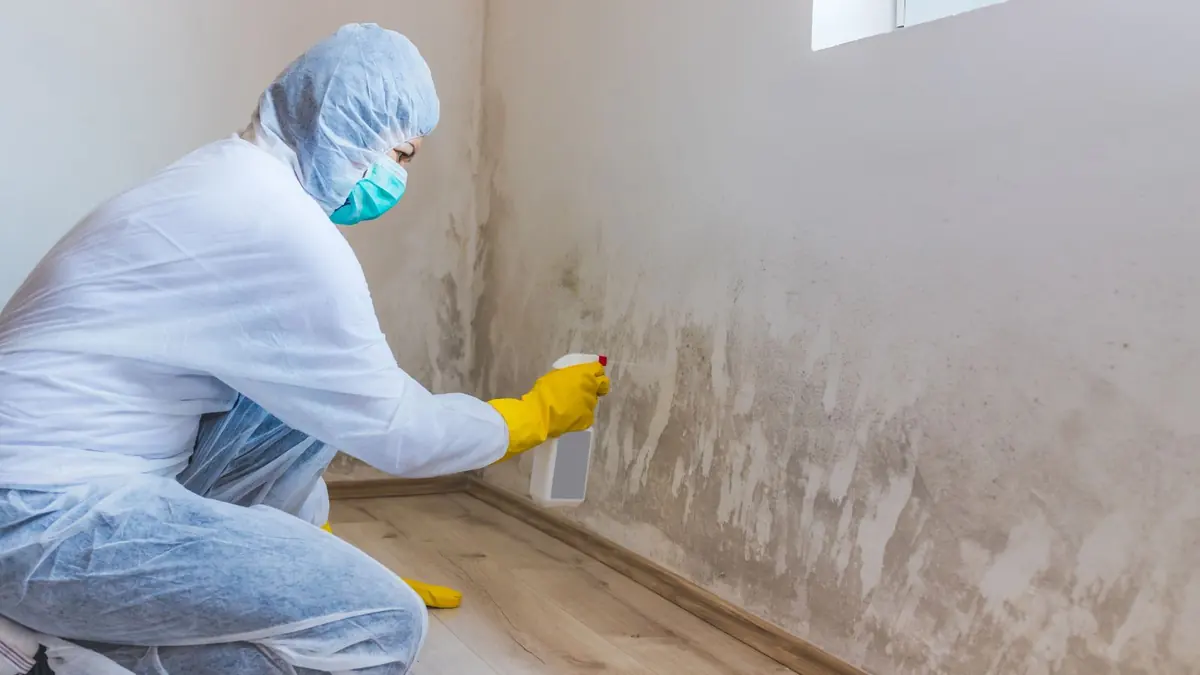
The short answer for a mold-stained wall
To get rid of mold on a wall, fix the water source first, then clean hard, sealed surfaces with detergent and water and dry them completely. The EPA says that if there is mold growth in your home, you must clean up the mold and fix the water problem. Soft materials like wet drywall and insulation usually cannot be cleaned and have to be removed.
That one split, hard surface versus porous material, decides almost every wall job in Laguna Beach, CA. A tiled shower wall and a bedroom wall that sat damp behind a dresser for three months are very different problems, even if the stain looks alike.
Start by finding out where the water came from
Mold needs moisture, and the EPA is blunt about it: none of the many types of mold will grow without water. So before you pick a cleaner, trace the wetness. Look for a drip under a sink on the other side of the wall, a window frame that leaks in a storm, a shower valve that weeps into the cavity, or a dishwasher line behind a cabinet.
A moisture meter is the quick test. Pressed against drywall, it reads high where the board is still wet, even when the paint feels dry. If you do not own one, a crew can bring a meter and a thermal imaging camera, which shows cool damp patches inside the wall without opening it.
Wall surface by wall surface: what to do
Use this as a first sort. If a surface falls in the right-hand column, stop scrubbing and call.
| Surface | What a homeowner can do | When it needs a professional |
|---|---|---|
| Painted drywall, small surface spots | Wipe with detergent and water, dry fully, then watch the spot for a week | Spots return, paint bubbles, or the board feels soft or cool |
| Tile and grout in a bathroom | Scrub with detergent and a stiff brush, rinse, run the fan and dry | Grout crumbles, tiles sound hollow, or the wall behind is damp |
| Plaster or textured walls | Light wipe only, because scrubbing can drive moisture into the surface | Stain spreads, plaster flakes, or there is a musty smell with no visible spot |
| Wall cavity after a leak | Nothing. You cannot see or reach it | Always. Needs opening, drying equipment and often removal of wet board |
| Baseboards and trim | Wipe sealed, painted trim and dry it | Raw wood, swelling or paint lifting along the bottom edge |
Wear gloves, eye protection and a mask rated for dust, and keep a window open while you clean.
What you can wash off, and how
Hard, sealed surfaces are the ones you can clean yourself. That means glazed tile, sealed grout, glossy paint on a bathroom wall and a bathtub surround. The EPA's advice for these is plain: scrub with detergent and water, then dry the area completely.
Use a soft brush on paint so you do not strip it. A towel and a fan finish the job, because a surface left damp invites the same stain back within days.
Do not mix cleaning products, and do not paint straight over a stain. Paint covers the color but not the moisture underneath, and the spot reappears through the new coat.
When the drywall has to be cut out
Drywall is paper-faced gypsum. Once wet paper stays damp, the growth sits inside the material, and wiping the face does not reach it. If the board is soft, crumbles at a screwdriver tip, has a stain on both sides, or stayed wet for more than the 24 to 48 hours the EPA gives as the drying window, plan on removal.
A crew cuts the board back past the damaged area, usually a flat line a short way beyond the visible edge, and bags it on the spot. Insulation behind it is removed too. Then the studs get cleaned and dried, and air movers and a dehumidifier run until a meter confirms the framing is dry.
Removal follows S520 practice, the published industry standard for mold remediation. You can ask any company whether its crews work to it. After that, the rebuild is ordinary drywall, tape, texture and paint, covered by our water damage repair work.
What Laguna Beach homeowners should know about white crust on walls
The Laguna Beach County Water District's 2022 Water Quality Report, a utility report, lists total hardness of 274 ppm, which is 16 grains per gallon. Hard water leaves mineral residue, so a whitish crust around a shower valve, a tile edge or a splash zone is often scale and not mold.
The practical step is to look and test before you scrub. Scale is chalky and dry, and it tends to sit where water evaporates. Growth is more often fuzzy or spotted and sits where the surface stays damp. If you cannot tell, a crew can check with a moisture meter and, where it makes sense, a sample, so you do not tear out a wall that only needed descaling.
A safe order of work for a stained wall
- 1
Stop the water
Shut off the supply or the appliance feeding the wall, and repair the leak or call a plumber.
- 2
Measure
Check the wall with a moisture meter or, at minimum, press the board for softness and look for stains on the back side.
- 3
Clean or cut
Wash hard surfaces with detergent and water. For wet drywall, call for removal rather than scrubbing.
- 4
Dry completely
Run fans and a dehumidifier. If the cavity was wet, a crew sets air movers and checks readings daily.
- 5
Rebuild and recheck
Replace board, prime and paint, then look at the spot again after the next rain or shower week.
Why the stain keeps coming back
A wall that stains again is almost always telling you the moisture is still there. A roof flashing that leaks only in heavy rain, a bathroom with no working exhaust fan, or a cold exterior wall where indoor air condenses will all feed a patch you have just cleaned.
Check that the bathroom fan vents outdoors and is run during and after showers. If you have had a pipe leak, ask for a final moisture reading before anything is painted, and keep that reading with your records.
Mold near Aliso Viejo and Dana Point
The same wall questions come up across south Orange County. Our pages for Aliso Viejo and Dana Point explain how emergency dispatch works for homes there, and the mold remediation page covers containment and removal in more detail.
Want a straight answer on your wall?
Call and describe what you see. We explain the scope and price before work starts.
Frequently Asked Questions
Can I get rid of mold on a wall with bleach or vinegar?
On a hard, sealed surface, detergent and water plus thorough drying is what the EPA recommends. Do not mix products with each other. On porous materials such as drywall, no surface cleaner reaches the growth inside, so removal is the usual answer.
How do I know if it is mold or hard-water scale on my wall in Laguna Beach?
Scale is chalky, whitish and sits where water dries, such as around shower valves. Local hardness is 274 ppm per the Laguna Beach County Water District's 2022 report, so mineral crust is common here. Wipe a small spot with a damp cloth and check whether the wall underneath is dry. If it is fuzzy, dark or tied to a damp patch, get it measured.
Do I need to cut out drywall for a small spot?
Not always. A small spot on sealed, dry paint can often be washed and watched. If the board is soft, stained through, or was wet for more than a couple of days, it is cut out.
Is it safe to paint over a cleaned wall?
Only once the wall is fully dry and the water source is fixed. Painting over damp board seals moisture in. Ask for a moisture reading first.
Does a wall repair in Laguna Beach need a city permit?
Permit rules cover building, altering and repairing, and changes to plumbing, electrical or mechanical systems. The city does not say whether minor drywall work needs one, so ask the City of Laguna Beach Community Development Department before a larger rebuild.