
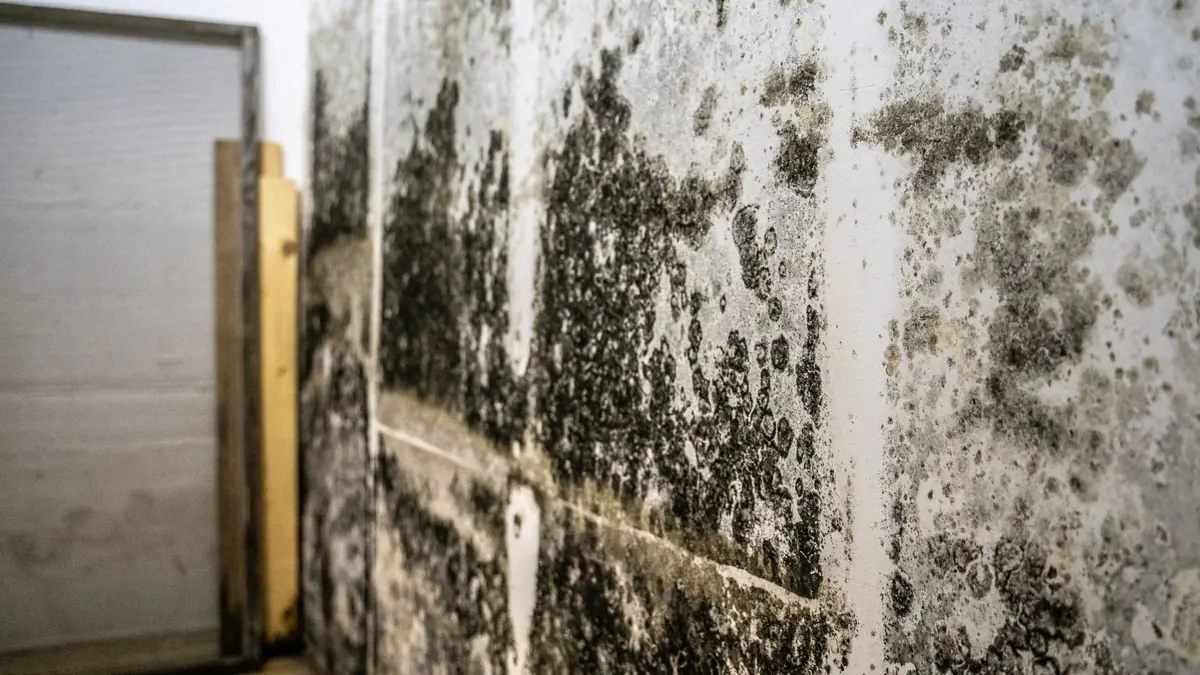
The short answer for a Laguna Beach basement
To get rid of mold in a basement, fix the water source, then clean small patches on hard surfaces with detergent and water and dry them completely. Remove porous materials that stayed wet, such as carpet, drywall and insulation. Call a professional when the growth is large, keeps returning to the same spot, or sits on something you cannot safely reach.
That is the EPA sequence: find the moisture, dry it, then clean or remove what mold has colonized. Skipping step one is why scrub jobs fail. This guide is for Laguna Beach, CA homes with a basement, a lower level cut into a slope, or a below-grade room such as a cellar. If yours has one, check it on a schedule.
Step zero: find out why it is wet
Mold needs moisture, and the EPA states that none of the many types will grow without it. So start by tracing the water. Look for a dripping supply line, a weeping drain, a damp wall that stays cold to the touch, or a pooled corner after rain.
A moisture meter gives a reading you can compare with a dry wall elsewhere in the house, which is more reliable than guessing by feel. If the source is a plumbing leak, shut off the water and call a plumber. Restoration crews dry and clean, but we do not repair pipes, waterproof foundations or fix roofs.
What a fresh versus an old source looks like
A sudden leak leaves a dark, evenly damp patch with a clear edge. A slow seep leaves tide-line staining, flaking paint or white mineral crust on masonry. Slow sources often matter more, because they feed the same patch for weeks.
Decision table: clean it, cut it out, or call
Match what you see to the material it is growing on. When two rows seem to fit, take the more cautious one.
| What you see | Material | Usual next step |
|---|---|---|
| A few spots, dry source fixed | Sealed concrete, tile, metal, glass | Scrub with detergent and water, rinse, dry fully |
| Fuzzy or stained patch, wall was wet | Painted drywall | Cut out the wet section, since paper facing holds moisture |
| Musty smell, carpet was soaked | Carpet and pad | Remove and discard, then dry the slab beneath |
| Growth behind baseboards or cabinets | Wood framing, cabinetry | Open the cavity, dry, and have a crew assess salvage |
| Patch larger than a few feet across | Any | Call a professional crew for containment and removal |
| Water came from a sewage backup | Any | Do not clean it yourself, call right away |
| Same patch returns after cleaning | Any | The source is still active, so get a moisture assessment |
The table is a guide, not a diagnosis. A crew with a moisture meter and a thermal imaging camera can see wet material that the surface does not show.
Cleaning small growth on hard surfaces
For a small area on concrete, tile or sealed metal, the EPA advice is simple: scrub with detergent and water, then dry the surface completely. Wipe, do not spray, so you are not throwing spores into the air. Seal the trash bag before you carry it out.
Wear an N95 respirator, gloves and eye protection, and run a fan that exhausts out a window or door. Bleach is not required for this job, and mixing cleaners can release dangerous fumes. If a family member has a health concern, ask a physician before doing the work yourself, because health questions belong with a doctor and not a cleanup guide.
What has to come out, and why scrubbing is not enough
Porous materials hold water inside, so surface cleaning cannot reach what is going on within them. Carpet pad, insulation, ceiling tile and drywall that stayed wet beyond a couple of days are normally removed and bagged. The EPA notes that water-damaged areas should be dried within 24 to 48 hours to head off mold growth.
Wood framing is the exception. Solid lumber can often be dried and cleaned in place, which is where injectable drying and air movers earn their keep. Cutting a clean line two feet past the visible edge of drywall damage is common practice, because moisture travels farther than the stain does.
Stop and call before you start
Do not disturb a large patch, anything near wiring, or any growth after sewage or floodwater. Turn off power to a wet room only if you can reach the panel without standing in water.
When a crew is the better call
A professional job starts with containment: plastic sheeting, negative air and a HEPA air scrubber so loosened spores are captured instead of drifting upstairs. Removal and cleaning then follow ANSI/IICRC S520 practice, which you can ask any company about. See our mold remediation page for how that process runs.
If the cause was a burst line or flood, the drying comes first. Our water mitigation crews pull standing water, set LGR dehumidifiers and air movers, and track readings daily until the structure is dry. Testing is sometimes useful, but it does not replace finding the source and removing what is wet.
What Laguna Beach homeowners should know about hillside lower levels
The City's 2021 to 2029 Housing Element, a city planning document, says steep hillside terrain shapes development in Laguna Beach. Lower levels cut into slopes sit against soil, so keep an eye on walls for damp patches that appear without a leak inside.
The California Geological Survey lists the October 2, 1978 Bluebird Canyon landslide among the area's notable historic slope failures, and neither it nor local press states a cause. The practical lesson is simple: if you see wet ground outside, new seepage or fresh cracks in a wall or slab, report it to a qualified professional instead of treating it as a cleaning problem.
Nearby towns we also dispatch to
If your basement question comes from a second home or a relative's house, we also send crews to Laguna Niguel, about nine miles from our Laguna Beach base. The same decision table applies there.
Homes in Aliso Viejo can use the same approach, and the 24/7 line takes the first call either way. Same-day response is available when crews are free.
Describe it to a person, not a search box
Call the 24/7 line. Scope and price are explained before work starts.
Frequently Asked Questions
Can I kill basement mold with bleach?
The EPA guidance for hard surfaces is detergent, water and complete drying, and it does not call for bleach as a required step. Bleach on porous material such as drywall does not reach the moisture inside it. Never mix bleach with ammonia or other cleaners.
Does a dehumidifier get rid of mold?
No. A dehumidifier lowers humidity so mold has less to grow on, but existing growth stays on the surface until it is cleaned or the material is removed. Think of it as a tool for after cleanup, not a replacement for it.
Do I need mold testing before cleanup?
Not always. If you can see growth and know the cause, the step that matters is fixing the water and removing the affected material. Ask a company how it would use testing, and whether its crews work to S520 practice.
Does insurance cover basement mold cleanup in California?
It depends on how the water arrived. Sudden and accidental damage is often covered, while gradual leaks and neglect often are not, and flood usually needs separate flood coverage. Ask your insurer and check your policy before work starts.
What should I check if my Laguna Beach lower level smells musty after a dry week?
Look for a hidden source: a slow supply-line drip, a damp exterior wall or seepage from the slope side. If the wall feels cold and damp or you see new cracks, report it to a professional and call us for a moisture reading before you replace any finishes.