
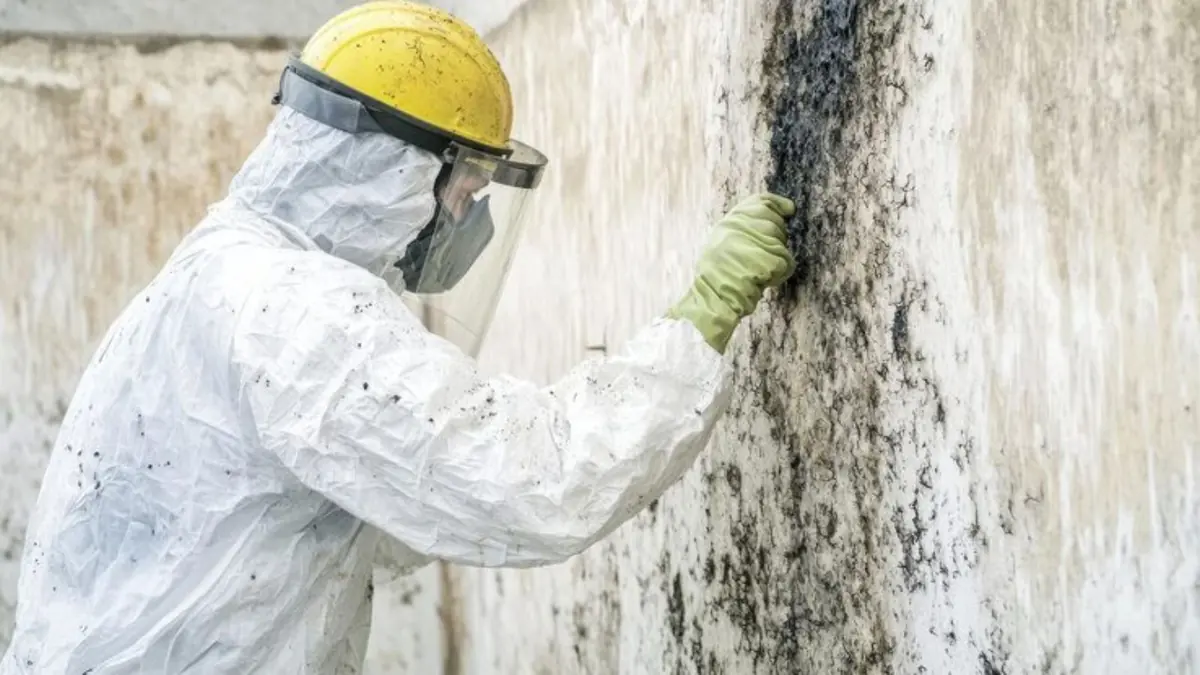
Clean it carefully, and fix the water first
To clean dark mold-like growth, wear gloves, eye protection and a dust mask, wet the surface with detergent and water instead of dry scrubbing, wipe it off a hard surface, and dry the area fully. Then find and fix whatever kept it wet. Without that last step the growth has everything it needs to return.
This applies to small patches on hard surfaces. Larger areas, soft materials and anything inside a wall belong with a professional, and the sections below show where that line sits for a home in Laguna Beach, CA.
What not to do, even if you are in a hurry
Most mistakes with dark growth come from rushing. Do not mix cleaning products, because some combinations release fumes in a closed bathroom. Do not dry scrub, sand or scrape a patch, because that sends fine dust into the air and across the room.
Do not paint or caulk over it. A fresh coat hides the color and traps the dampness underneath, so the mark bleeds back through. And do not run a fan so that it blows across the patch into other rooms.
Skip the temptation to spray and walk away, too. A surface left wet is a surface set up for the next round.
Do and do not at a glance
Keep this list on the bathroom door while you work.
| Do | Do not |
|---|---|
| Fix the leak or condensation source first | Clean while the wall is still being fed water |
| Wet the surface with detergent and water before wiping | Dry scrub, sand or scrape |
| Wear gloves, goggles and a dust mask | Work bare-handed or in a sleeveless shirt |
| Bag wipes and cloths tightly and put them out with the trash | Shake rags out indoors |
| Open a window and keep the door to other rooms shut | Aim a fan so air carries dust through the house |
| Dry the area fully and recheck in a few days | Paint or caulk over a stain that is still damp |
| Use one product at a time and rinse between | Combine cleaners to get more power |
If anyone in the home has a health concern, ask a physician before doing the work yourself. We do not give medical advice.
Gear in plain terms
You do not need a spacesuit for a hand-sized patch on glazed tile. You do want gloves that cover the wrist, goggles that seal at the edges so drips cannot reach your eyes, and a mask rated to filter fine dust, such as an N95. Old clothes you can wash right away are fine.
For larger jobs, crews add disposable coveralls, shoe covers and a respirator, and they work behind plastic sheeting with a HEPA air scrubber running. That setup is called containment, and it is the main thing a home kit cannot copy. The published standard for that work is S520, and you can ask any company whether its crews follow it.
Hard surfaces versus porous materials
This is the line that matters most. Glazed tile, sealed grout, glass, metal and glossy painted trim are hard surfaces. The EPA says to scrub these with detergent and water and dry them completely.
Porous materials are different. Ceiling tile, carpet, insulation and unfinished drywall absorb water and the growth goes with it, so wiping the face does not reach it. These are usually removed and replaced, not cleaned. Wood framing sits in between: it is often cleaned and dried in place, not thrown out.
If you are unsure which category a surface falls into, treat it as porous and ask. Cutting out a small square is a smaller job than repainting the same wall three times.
Call before you start if
The patch is larger than a few feet across, it is in a ceiling or inside a wall, you smell mustiness with nothing visible, the water source was sewage or floodwater, or the material is soft to the touch. Those jobs call for containment and a documented scope.
Size, location and the moment to hand it off
Small, visible, hard-surface patches are manageable. Anything hidden is not, and that includes the back of drywall, the inside of a closet wall, the space under a sink and the cavity behind a tub. Growth you can see is often a fraction of what is behind it.
A crew confirms the extent with a moisture meter and a thermal imaging camera, then sets up containment, removes the affected material and dries the framing with air movers and dehumidifiers. When the cause was a recent leak, our water damage cleanup work handles the wet-down and drying alongside the mold remediation itself.
What Laguna Beach homeowners should know about the rules
The EPA, a federal agency, states it directly: if there is mold growth in your home, you must clean up the mold and fix the water problem. Doing only one half is the usual reason a patch returns, so budget time for the plumbing or the ventilation fix, not only the wipe-down.
If you hire help, check the licence. The California Contractors State License Board, the state agency, raised the licensing threshold on January 1, 2025 to one thousand dollars, counting labor, materials and other items together. Unlicensed work under that amount is limited: no workers can be hired and no building permit can be needed. Look up any contractor's licence on the CSLB site before you sign, and keep the lookup with your records.
Comparing the nearby areas
Homes in other towns run into the same questions. A condo in Laguna Woods and a bayfront house in Newport Beach can both end up with a damp wall and the same hard versus porous choice. Our pages for those areas describe how emergency dispatch works there.
Want someone to look at it first?
Call and describe the patch. We explain the scope and price before work starts.
Frequently Asked Questions
Can I clean black mold with bleach?
On hard surfaces, the EPA recommends detergent and water and complete drying. Never combine bleach with ammonia or other cleaners. On porous materials no liquid reaches the growth inside, so removal is the safer route.
Is it okay to scrub a dry patch off the ceiling?
No. Dry scrubbing or sanding sends dust through the room. Wet the surface first, or leave it for a professional, especially overhead where debris falls on you.
How do I check a mold contractor's licence in California?
Use the CSLB licence lookup on the Contractors State License Board website. The Board lists classifications on each record, including a water damage remediation classification. Confirm the name and status match who shows up.
What if the dark growth keeps reappearing in my Laguna Beach bathroom?
That points to moisture. Check that the exhaust fan vents outdoors, run it during and after showers, and look for a slow leak at the valve or behind the tile. Bring a moisture reading to any contractor you call.
When should I stop and call a professional?
Call when the area is large, soft, overhead or hidden, when the water was dirty, or when you cannot find the source. Ask for the scope and price in writing before work starts.